What AI Can't Replace: Authenticity Is Your Greatest Career Asset
AI isn't going to take your job. But it might erase what makes you memorable.
Let me explain.
At this moment in time, 87% of companies are using AI-driven tools in their hiring processes, 55% of job seekers are using AI to craft their resumes and cover letters, and 90% of hiring managers report a surge in what they're calling "spammy, low-effort applications." And on the business side, AI-generated content is flooding every platform, every inbox, and every news feed, making it harder than ever to tell one voice from another.
The result is a strange kind of sameness. Everyone looks polished and sounds professional… but almost no one sounds like a real person anymore.
I've been talking about this on podcasts and at networking events for months now, and it's the topic that gets the biggest reaction every single time. Whether you're a job seeker trying to land your next role, a business owner trying to attract clients, or a leader trying to build influence, you're facing the same challenge: how do you stand out when AI is making everyone to sound the same?
The answer isn't to abandon AI. It's to reclaim your authenticity in how you use AI.
The "Sea of Sameness" Is Costing People Opportunities
Let's start with the job search side, because the data here is striking.
A 2025 survey of hiring managers found that 62% say AI-generated resumes without personalization get rejected. And over a third of hiring managers say they can spot an AI-generated resume in under twenty seconds. It’s pretty obvious…
Here's the part that really gets me: 64% of recruiters reported seeing a significant increase in look-alike applications over the past year. The tool that was supposed to give job seekers an edge is actually making them blend in. Everyone's using the same prompts, getting the same outputs, submitting the same polished (but extremely generic) materials, and then they wonder why they don’t hear back.
As one HR Executive article put it recently, AI in hiring is creating a candidate pool full of optimized, algorithm-friendly professional narratives that are increasingly impossible to distinguish from one another. They use the same keywords, have the same structure, and use the same voice. These applications are polished, but lack character.
It's not just resumes. This is happening with LinkedIn profiles, cover letters, emails, networking messages, and even interview answers. When everyone is using AI to sound "professional," it dilutes your authentic personal brand.
How It Affects Business Owners
If you're a business owner, you're seeing this play out in your own industry. You’re seeing AI-generated marketing copy, social media posts, email sequences, and website content, that all sounds competent and professional, but it all sounds the same.
Research shows that only 12% of people feel comfortable with content made entirely by AI, compared to 62% who are comfortable with entirely human-made content. Your audience can feel the difference, even if they can't always articulate it. They know when they're reading something that came from a real person with real opinions vs. something that was generated by an LLM.
It’s now possible for every business to produce polished content in seconds. The businesses that win are the ones with an authentic voice their audience recognizes, trusts, and connects with. That voice doesn't come from a better AI tool. It comes from YOU!
The Tools That Are Meant to Help Us Can Dilute Us Instead
Most people are using AI as a replacement for their voice, instead of an amplifier.
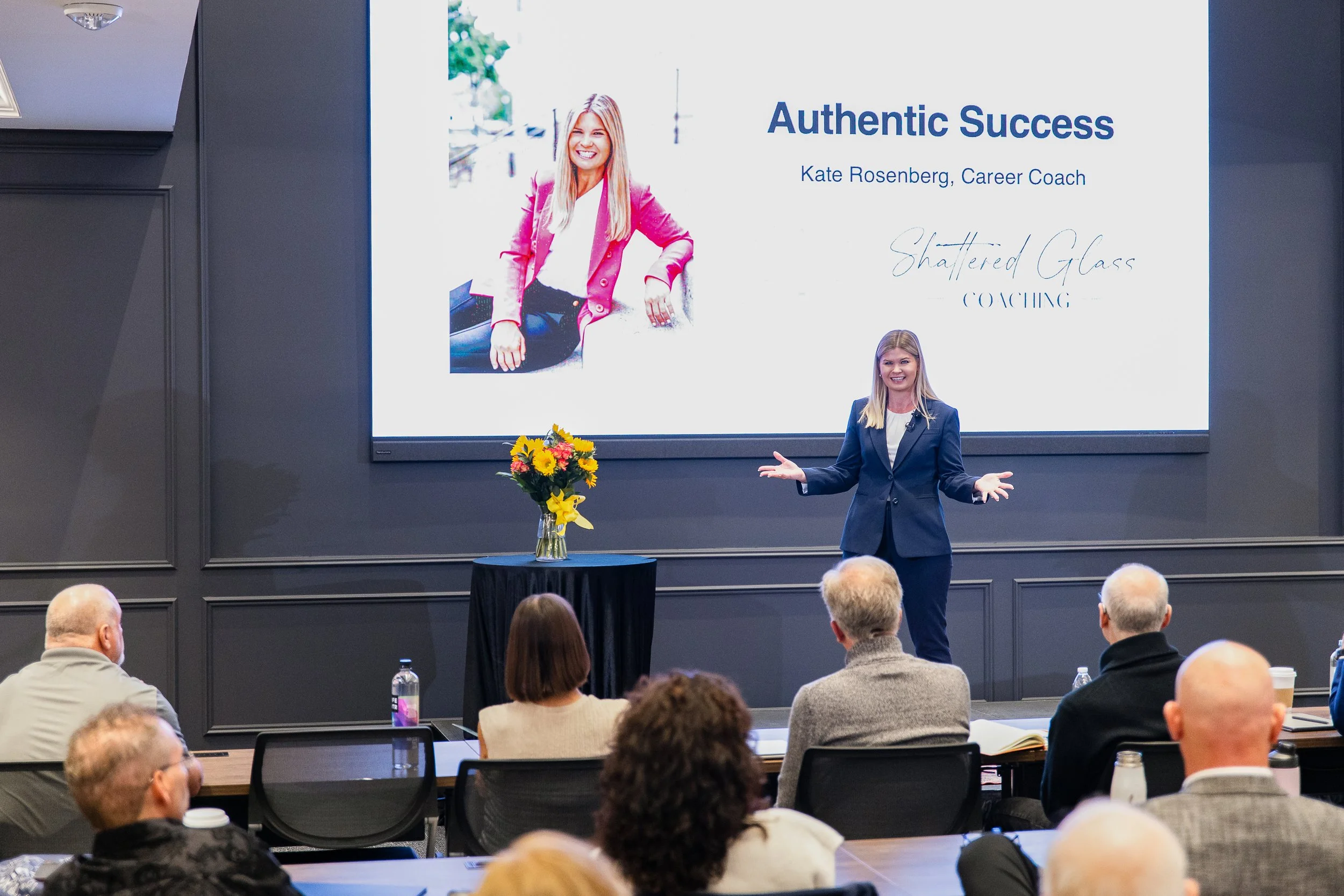
Think of AI as a microphone for your voice. It's a concept I explore in depth in my book Authentic Success, the idea that AI should amplify your message, not replace it. A microphone can make you louder, help you reach more people, and amplify your message so it travels further and hits harder. However, a microphone can't give you something to say. If you hand the microphone to someone else (or in this case, to an algorithm), what comes out isn't you. It's a generic approximation of what "you" might sound like based on patterns in everyone else's language.
AI can't spontaneously react to a current event that reveals your values. It can't reference the career failure that taught you your most important lesson. It can't use your specific sense of humor or channel the frustration you felt in that terrible meeting last Tuesday. It can't tell the story about the time you almost quit your industry and what made you stay.
Those are the things that make people trust you, hire you, follow you, and buy from you. And those are the things AI literally cannot replicate.
The professionals and business owners who are thriving right now aren't the ones with the best AI tools. They're the ones who know who they are, what they stand for, and how to communicate that clearly. Then, they leverage AI to support that clarity, not to replace their voice.
What Authenticity Actually Looks Like in Practice
Let me be specific, because "be authentic" has become such a buzzword that it's almost lost its meaning. In Authentic Success, I walk through a full framework for maintaining your human voice in an AI-driven world. Here are a few of the key principles.
Know what you actually think before you ask AI what to say.
Most people open ChatGPT before they've taken five minutes to clarify their own perspective. They ask AI to write their LinkedIn summary before they've defined what they want to be known for. They ask AI to draft their cover letter before they know why they actually want the job. Start with your own thinking. Your values, your experiences, and YOUR point of view. Then, use AI to refine, organize, or polish what's already there.
Specific is terrific.
Everyone is drowning in polished generalities. What resonates most with people is specificity. Not "I'm a results-driven leader with a passion for innovation" (please, make it stop). Instead: "I took a struggling team of 8, rebuilt our client onboarding process from scratch, and cut our churn rate by 30% in six months, all while our company was going through a merger that had everyone else running for the hills." See the difference? One sounds like AI and the other sounds like a human who's been in the trenches. Specificity makes you memorable.
Use your imperfections.
Being imperfect is what makes you human and relatable. Your setbacks, mistakes, pivots that didn’t work, or lessons you’ve learned the hard way. They might seem like “failures” to you, but they're your most powerful differentiators. AI can produce a flawless narrative, but flawless narratives don't build trust. Real stories do.
Develop your signature voice and protect it fiercely.
If you’re using AI to draft your content, always read it out loud and ask yourself, “Would I actually say this to someone over coffee?” If the answer is no— if it sounds stiff, generic, or like a corporate press release— rewrite it until it sounds like you. Your audience (or your interviewer, or your potential clients) will know the difference.
Build your personal brand on things AI can't replicate.
Your unique combination of experience, perspective, values, and personality is something no algorithm can duplicate. A strong personal brand built on those elements becomes an asset that travels with you from job to job and from business to business. It becomes more valuable over time.
The Professionals Who Thrive in an AI-Driven World
PwC's research tells us that workers with AI skills command wages up to 56% higher than peers in identical roles without those skills. AI fluency matters and I'm not arguing otherwise.
The data also shows that 93% of hiring managers say human involvement remains essential, even as AI usage increases. The consensus isn't "replace humans with AI." It's "the best outcomes come from human-AI collaboration." The humans who thrive in this environment are the ones who bring something AI can't, such as judgment, lived experience, emotional intelligence, a unique point of view, and the ability to connect with other humans in a way that builds trust.
Whether you're in a job search, building a business, or leading a team, you SHOULD be using AI, but make sure you’re using it in a way that amplifies who you are and doesn’t replace your authentic voice. The human ability to communicate with authenticity is an advantage that no algorithm can replicate.
The job seekers who are landing roles fastest right now are crafting applications that sound like a real person wrote them… because a real person did, with AI as a tool, not a ghostwriter. The business owners who are attracting the best clients are the ones whose content sounds like them, not like everyone else's AI output.
AI has made it so anyone can sound competent now. Competent isn't what gets you hired, promoted, followed, or trusted. What gets you there is being unmistakably, authentically you. The world doesn't need another polished, AI-generated professional narrative. It needs YOUR voice!
Ready to Build a Career That's Unmistakably You?
If this article hit home, I'd love to help you take the next step. Whether you're navigating a job search or building your personal brand, it starts with getting clear on what makes you different and building a strategy around it.